

Paul Krugman and Jared Bernstein have been going back and forth on the vibecession, or why economic sentiment and polling are at record low levels, worse than the Great Recession, given the overall non-recessionary environment. Krugman emphasizes the Trump administration failing to deliver on lowering prices, which was likely impossible given what Trump was promising, and doing many things to worsen them. Jared argues in a new paper (with Daniel Posthumus) that if you model the price level itself into the estimate you can explain this divergence.
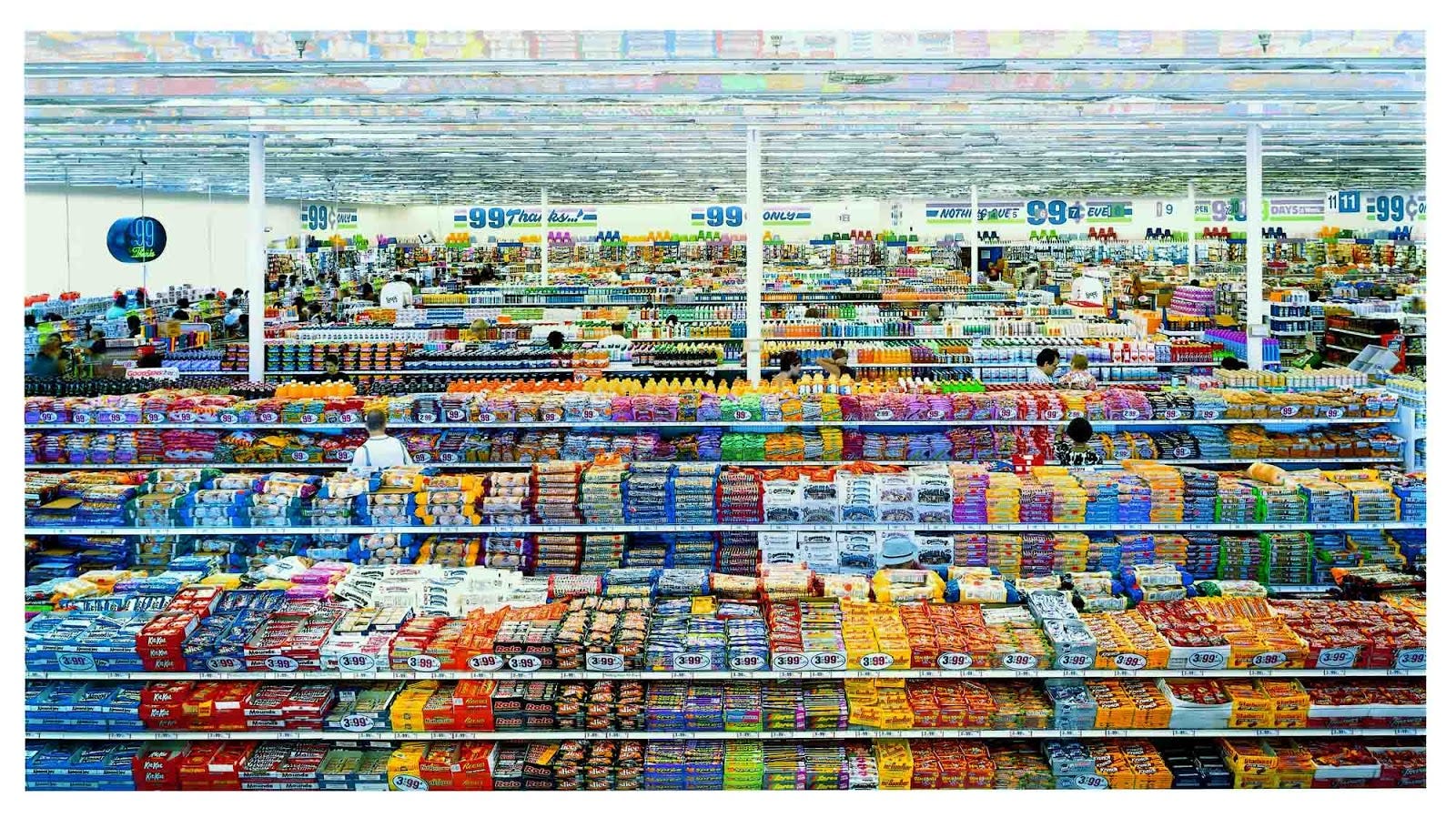
I’ve written before about why I think people are concerned about affordability given high price growth in key items. I want to take a different angle. It’s a thought experiment, and it probably needs more analytical firepower than I can give it here, but I want to float it.
Making Comms People Sweat, Racial Wealth Gap Edition
First, let’s start with something you probably haven’t spent a lot of time fixated on: how would you describe the black-white racial wealth gap during the Biden administration?
Let’s take data from a Federal Reserve study, derived from the Survey of Consumer Finances, a high-quality survey of wealth administered every three years, last administered in 2022 (we don’t have 2025 yet). Here is black and white median wealth, inflation adjusted, for several years.1
One might say that “the racial wealth gap is the lowest it's been in 20 years.” This is the standard measurement of the ratio between the two, where 6.35 is the lowest since 2001. But reporters and others could ask, isn’t it the highest in decades? The absolute difference is the largest among all these measured here.
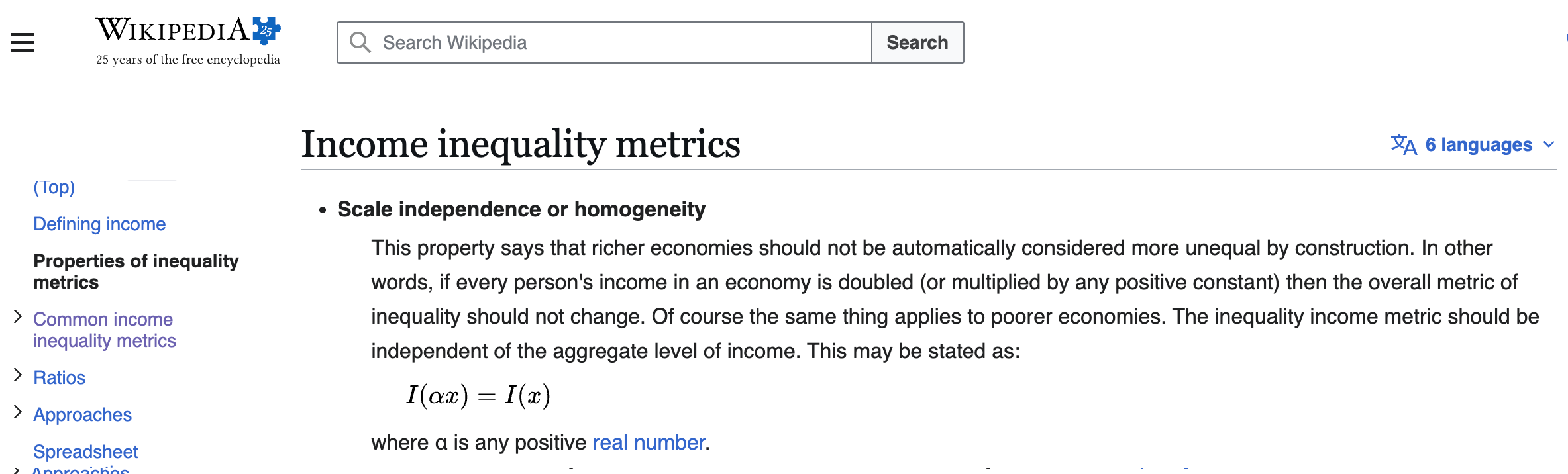
I would think a good response is: no, our measures of inequality are scale invariant. If you double incomes, the inequality measure should remain the same. This isn’t partisan. Check out the link for inequality measures on Wikipedia and there’s a whole “properties of inequality metrics” section that discusses scale independence. We talk about the 1% and the 99%, and if you double everyone’s income the 1% and the 99% still get the same shares. This is even more important since we compare inequality across decades, even a century, from the 1980s, 1950s, and 1920s. If we brought in an 18th century farmer to discuss absolute inequality measures, it wouldn’t answer any question that’s relevant.
(You can also imagine the look of shock and horror on the faces of a team of communication professionals when they realize you would really say this to a reporter, in fact you think this is not just a great and sufficient answer, but you can’t even wrap your head around an alternative argument.)
(And in case you are wondering on the ‘lowest in 20 years’ verdict, alas, Politifact: “We rate this claim Half True.”)
Economists are trained to think in ratios and how results change if they are multiplied by constants. Our inequality measures work this way. It’s also a stronger, key assumption built into macroeconomic theory, that if you double every price and every income then real variables shouldn’t budge. That is homogeneity of degree zero.
But everyday people have concerns, in the short term, over absolute differences. I want to be clear that, by talking about absolute levels, I’m not invoking money illusion. I want to at least approximate stories that could survive rational expectations. And I think absolutes can matter because people believe their room to absorb an unexpected cost scales with absolute income. I think there are three such vibecession stories that survive this.
Three Reasons In Play
It’ll be easier with some examples, and those are best based on actual numbers. Here, from the Economic Policy Institute, are real wages by percentile, from 2019 to 2024.
Wages are up following inflation. These are big wage increases for those at the bottom. But it still nets to a real absolute increase of under $2 an hour, indeed most are under that threshold though the 80th percentile has higher absolute increases than the 20th. If the new price environment is more volatile and complicated then absolute differences might matter.
Let’s discuss these three.
Essentials
Imagine a person near the bottom of the income distribution, who is spending as much or more than they make as a result of borrowing. This makes them very sensitive to specific costs, like food, electricity, and auto insurance, all of which are hard to cut.2 Even if essentials rose in proportion, the risks of having little should make people concerned about absolute prices. But these items rose much faster than overall prices, as shown in Figure 1 above. For those with low incomes, the squeeze here is particularly difficult, and if you view utility as spending above a certain baseline, that baseline increasing faster causes distress.
Housing
I tend to be a housing-theory-of-everything person, so much so that I’m excited to say I’ll have a big housing report out in the next month or so. And the housing situation is bad.
The median sale price of a newly built home bought with an FHA mortgage, a common financing path for first-time buyers, went from about $240,000 in 2019 to around $356,000 in late 2025, up roughly 48%. The 30-year mortgage rate went from around 4% in 2019 to over 6% now, which means the same house costs more every month even before the sticker price moves. Homeowners benefit from the wealth, but they also realize any new home they are going to buy has gone up in price too, and interest rates are higher. Fully-anticipated inflation can make home-buying more inaccessible (Modigliani and Lessard, 1975). But given the even higher costs here, it is easy to see how this causes angst.
Risks
I think the absolute level also matters for tail risk situations, where sudden, unexpected costs could impose a much higher penalty even adjusted for inflation. Let’s take health care. Kaiser Family Foundation’s Employer Health Benefits Survey reports that family coverage premiums in 2024 are up 24% since 2019, comparable to overall inflation. But the average isn’t what you worry about, it’s the tail. In any given year you might face a plan that dropped your doctor this cycle, a partial denial on a procedure, or a specialty referral that sends you outside the network. And now the premium tax credits have expired, while there’s also a trillion dollars of cuts to Medicaid on the horizon.
Essentials, housing, and tail risks all survive two key tests. First, they follow Binetti, Nuzzi, and Stantcheva (2024) in that “increased complexity and difficulty in household decision-making” are a central problem people cite for inflation in surveys. All of these fit that characterization.
Second, these were made worse under Trump, so they can justify the further decrease in sentiment and economic conditions in 2025. Tariffs made food prices worse, housing was hit by tariffs, interest rates, and likely deportations, and insurance is being hit by price increases from the end of the premium tax credits and future Medicaid cuts which will devastate rural and regional health care providers. This is a pretty bad situation for people. But these are solvable problems, in fact we can solve them.
For the regulars, how do we feel about Datawrapper for the graphics here? I’m going to try it for a while; it is very easy to use within Substack. It just depends on how much it eats up the “post too long” bandwidth for when I need many graphics.
Food here is both food-at-home (groceries) and food-away-from-home (which is eating out and getting deliveries). Groceries still runs ahead of all items, but by less. But as we discussed during DoorDash Discourse, that people switched from eating out to eating at home well after lockdowns should be understood to be a penalty they paid in adjusting their consumption.
Hi Mike. On your housing-is-everything bias, wondering if this seems pertinent: https://wealtheconomics.substack.com/p/mortgage-payments-and-the-vibecession Thanks.
I find the rise in median house sale prices and mortgages over the past 6 years especially concerning given the rise in WFH jobs that started right around these price jumps. The urban housing premium should be decreasing given that there is much less of a need to be close to your office on average these days.
Just a random thought…