

I’m planning to invest more energy into this Substack in 2026. Here’s what I’m working toward and why.
I enjoy writing empirical pieces that surface new arguments, work that’s too specific for traditional outlets but too substantial for social media. Twitter/X no longer supports that kind of work, and Substack does. And 2026 is going to be a consequential year, so I want a place where I can be part of the public conversation as it happens.
My initial goal is to write one post a week. Sometimes I’ll do more. I want to grow my readers. I don’t know what a realistic target is, but my stretch goal is to triple to 9,000 subscribers by year’s end. So please consider subscribing and adding me to your recommendations.
I plan to follow the secret of blogging as described by Max Read:
But the key lesson, the thing I would impart to any aspiring bloggers, content creators, or newsletter proprietors, is that the cornerstone of internet success is not intelligence or novelty or outrageousness or even speed, but regularity. There are all kinds of things you can do to develop and retain an audience [...] but the single most important thing you can do is post regularly and never stop.
Which in practice means I’ll stress less before hitting publish, posting without fear of perfectionism, knowing I will write again soon.
This Substack uses a sans-serif body text font because empirical and ideological work should feel clean, modern, and legible, and because I’m building toward a futurism of endless economic possibilities.
I’m turning on paid subscriptions, though I will keep everything free. Consider subscribing if you want to support this endeavor.
Disclosures
If I’m asking you to read, engage, promote, and support this Substack, I should make some disclosures. My full-time job is with the Economic Security Project, where I’ve led their policy and research team since March 2025. I expect to make more than 90 percent of my income from that job. This Substack is on my own time and independent of that work.
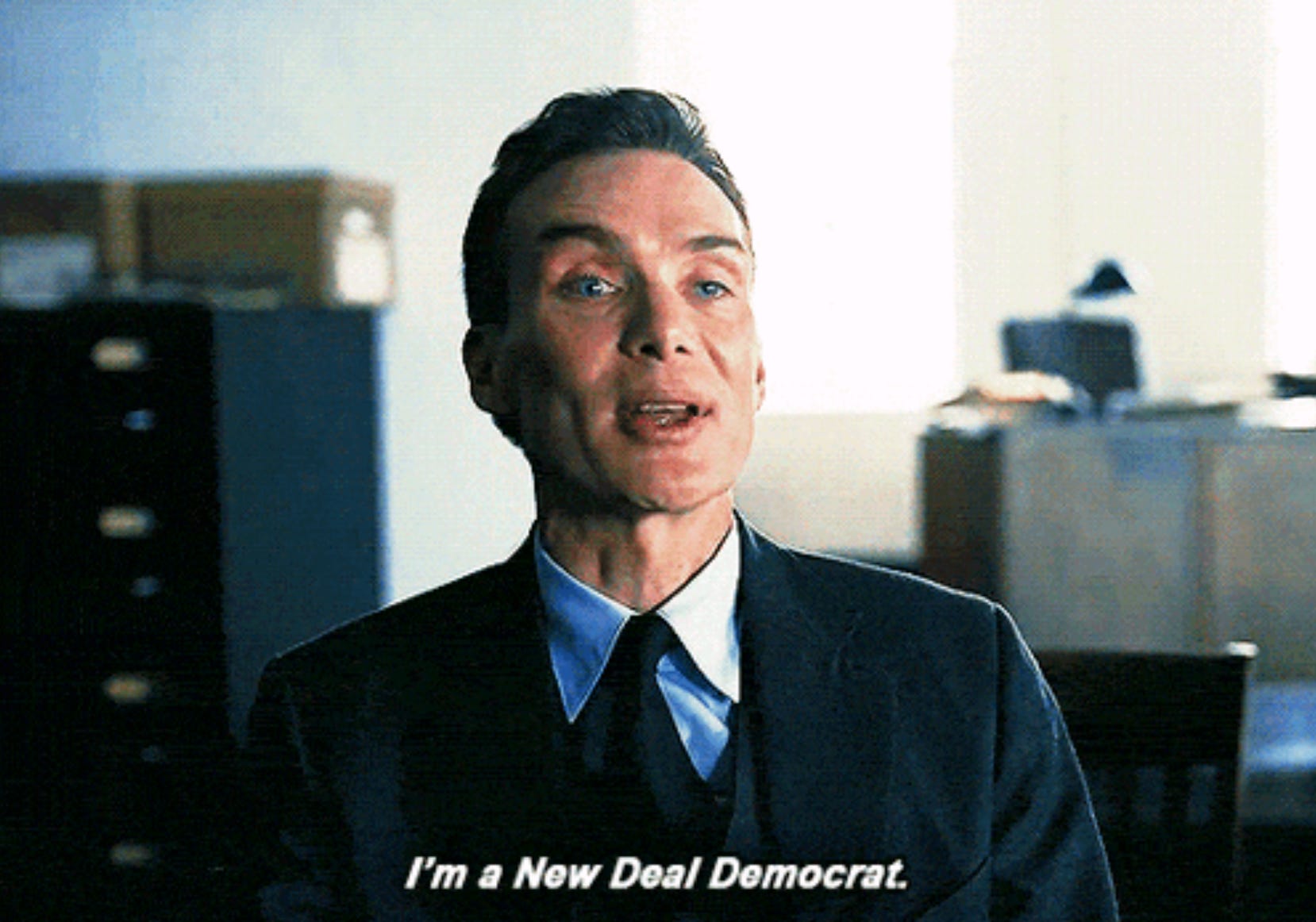
I recently served in the White House in 2024. That means I can state that I “favorably adjudicated Tier 5 investigation; Top Secret/Sensitive Compartmented Information (TS/SCI) clearance granted.” So this Substack is not compromised and displays “unquestionable loyalty to the U.S.” (My favorite part was an F.B.I. agent asking me about being on the editorial board of Dissent Magazine, and me getting to clarify that “Dissent was founded as the non-Stalinist magazine of the mid-century Left.”) It also means my personal finances are public. They are very boring, and I’m flagging them here so you know there’s no financial shenanigans in what I write.
I use AI daily for research work, particularly with data analysis. I’ve used R for 20+ years and spent time as a software engineer, so it’s easy for me to sanity-check AI code in real time.
For posts, I write a first draft myself, and then do three AI passes. The first is as an editor, asking what needs more work, what can be tightened, and what phrasing is unclear. I’ve been writing as a contributor for over 15 years, so I have a sense of what great editing looks like, and approach AI in that way. The second pass is fact-checking and anticipating objections. The third is proofreading.
I think AI images are fascistic and will try not to use them.
Hope you join me on this trip. As I am learning, please leave any suggestions for what makes a Substack work well in the comments.
And if you read this far, you can subscribe below.
What a great start! I should probably use my noggin and work out why AI images are facistic, (I don’t like them either) but if you would like to elaborate I’m sure it would be interesting. A future post?